Tea Growing Regions
India
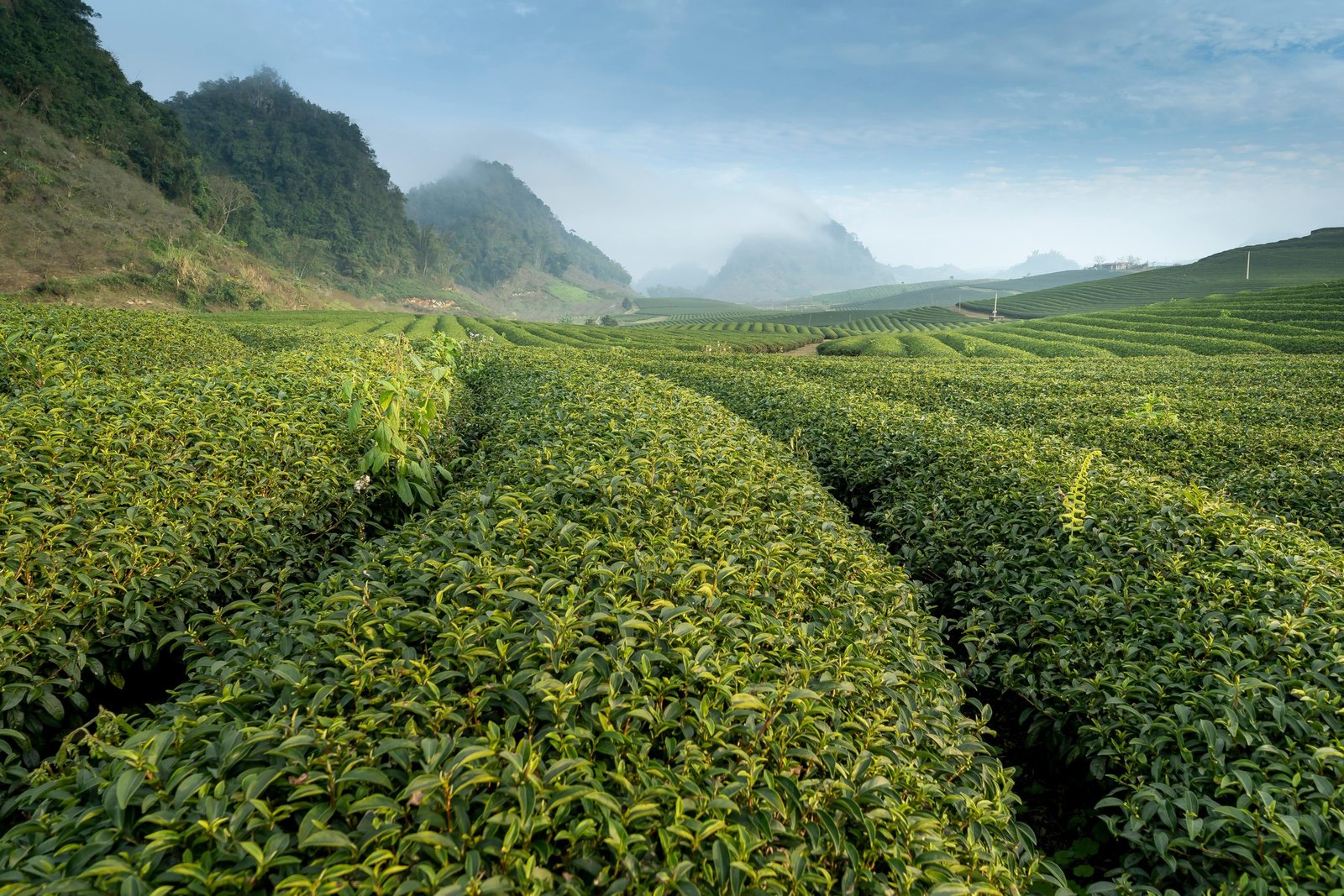
India is one of the world’s most important tea-producing countries and the second-largest tea producer globally. In 2024, India produced approximately 1.3 billion kilograms of tea, with Assam alone accounting for nearly half of this production, making it one of the most influential regions in shaping the character of Indian tea.
India’s presence is not limited to production alone. During the 2024–2025 financial year, its tea exports reached approximately 262.98 million kilograms, with an estimated value of 923.89 million dollars.
Black tea represents the largest share of Indian tea exports, reflecting India’s strong position in this particular category. From Assam and Darjeeling, we select teas that express the diversity of Indian tea. Assam is known for its strength, depth, and full-bodied character, while Darjeeling is distinguished by its aromatic profile and refined smoothness. At Assam, we do not choose tea based solely on name or reputation. We consider leaf quality, harvest season, production source, and processing method to offer tea that reflects the value of its origin and the precision of its selection.
Green tea is most prominently associated with China and Japan. In China, notable tea-producing regions include Zhejiang, Anhui, Jiangsu, and Sichuan, while Japan is renowned for regions such as Shizuoka, Kagoshima, and Uji in Kyoto. These regions are closely linked to well-known styles including Sencha, Gyokuro, and Matcha.
Oolong is one of the tea varieties most closely connected to its place of origin and processing method. China stands out in its production, particularly in Fujian and Guangdong, alongside Taiwan and its mountainous regions such as Alishan, Lishan, Dong Ding, and Shan Lin Xi. Oolong offers a wide range of oxidation and roasting levels, allowing it to develop either a delicate floral character or a deep, roasted profile depending on its origin and production method.
For this reason, tea cannot be judged solely by its general category. Black tea from Assam differs from black tea grown in Darjeeling, Chinese green tea differs from Japanese green tea, and Taiwanese high-mountain oolong differs from Wuyi rock oolong. Every region leaves its own distinctive signature on the leaf.
Japan
Japan is home to one of the world’s most important green tea traditions, where the value of Japanese tea is defined not only by production volume, but also by the precision of cultivation, processing, and preparation. In 2024, Japan produced approximately 74,000 tonnes of tea leaves, while its green tea exports continued to grow worldwide, driven by increasing interest in Matcha and other specialty Japanese teas.
From renowned tea-producing regions such as Shizuoka, Kagoshima, Kyoto, and Uji, we select teas that express the distinctive character of Japanese tea: a pure colour, a clear vegetal aroma, and a balanced flavour that may carry marine, grassy, or umami notes depending on the variety and processing method. Japanese tea is commonly processed by steaming to halt oxidation, a technique that gives green tea its fresh character and vibrant colour. From Sencha and Gyokuro to Matcha, Japan’s attention to detail is evident at every stage, from leaf selection and harvest timing to shading certain varieties, followed by steaming, rolling, drying, and, in the case of Matcha, grinding. At Assam, we select Japanese teas for their precision and calm, refined flavour. The leaves are carefully processed to preserve their vegetal character, pure colour, and gentle balance in the cup.

China
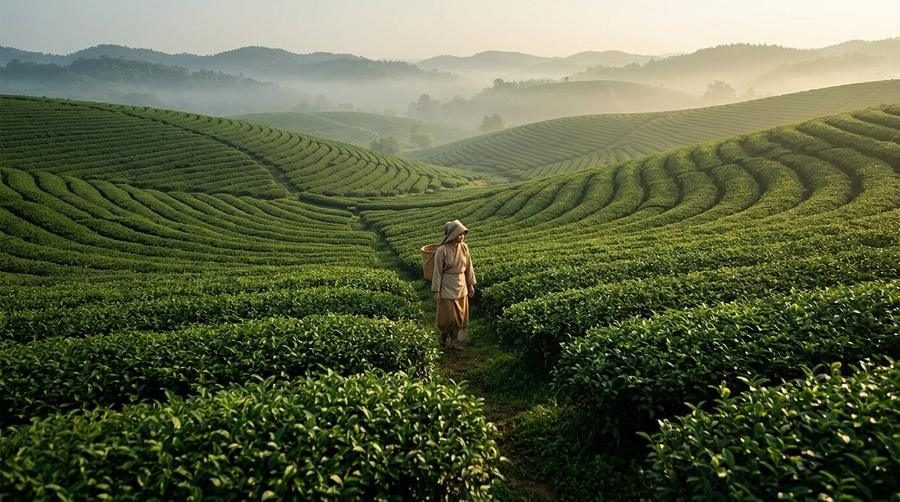
China is the world’s largest tea producer and one of the most diverse countries in terms of tea cultivation and processing methods. In 2024, its tea production reached approximately 3.7 million metric tonnes. This production includes green, black, white, oolong, and Pu-erh teas, reflecting the depth and diversity of China’s tea traditions.
From Yunnan, the historic home of tea and Pu-erh, and from prominent tea-producing regions such as Fujian, Wuyi, and Huangshan, we select leaves that clearly express the character of their origin. Yunnan is distinguished by its ancient tea forests and mature trees, some of which are hundreds of years old, particularly in Pu-erh-producing areas. This heritage gives tea its value not through age alone, but through the influence of the environment, season, harvesting method, and processing technique on the character of the leaf. In some tea farms across southern and western China, tea grows in mountainous environments at varying elevations, where altitude, climate, and processing methods shape the aroma, colour, and depth of flavour.
At Assam, we do not select Chinese tea based on name alone. We consider the quality of the leaf, its origin, harvest season, and production method, from withering and rolling to oxidation, roasting, and drying. We therefore seek teas with a clear character and a balanced experience worthy of specialty tea enthusiasts.